
Mat Etiquette: Gracie Barra Rules for a Respectful Tatami
The tatami is more than a training surface — it's a shared space that demands respect, discipline, and responsibility from every student.
At Gracie Barra Davenport, the mat is sacred. It's where transformation happens — where beginners become practitioners, where fear becomes confidence, and where a community is built through shared effort and mutual respect. That transformation only works when everyone follows the same code of conduct.
Mat etiquette isn't a set of arbitrary rules. Each one exists to keep students safe, maintain a positive training environment, and honor the traditions of Brazilian Jiu-Jitsu. Here's what every GB student — new or experienced — is expected to know.
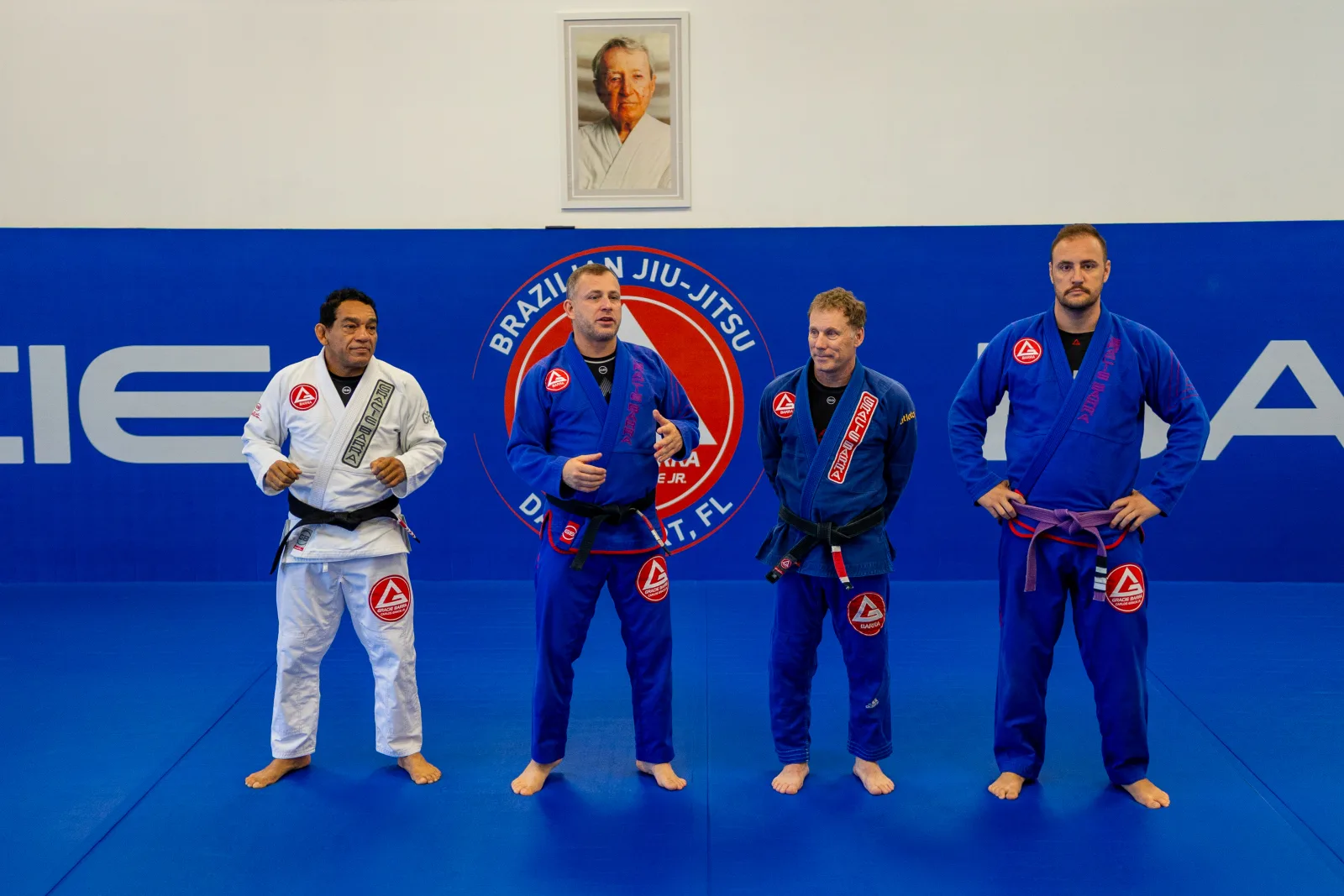
Before You Step on the Mat
Bow When Entering and Leaving
Every Gracie Barra school observes the tradition of bowing when stepping onto or off the mat. It's a brief moment of acknowledgment — of the space, the art, and the people you're about to train with. It takes half a second and it matters.
Keep Your Gi Clean
Your gi should be washed after every single training session. No exceptions. A dirty gi is disrespectful to your training partners and creates a hygiene risk for the entire class. It should also be free of holes, tears, or strong odors. If you train in no-gi, the same applies to your rash guard and shorts.
Trim Your Nails
Long fingernails and toenails are a real hazard in grappling. They scratch, cut, and tear skin — both yours and your partner's. Keep them short before every class.
No Shoes on the Mat
Shoes stay off the mat, always. If you need to leave the mat area and return, put on sandals or flip flops for the walkway, then remove them before stepping back on. This keeps the training surface clean and reduces the risk of foot infections.
Arrive on Time
Showing up late disrupts class and shows disrespect for your instructor and training partners. If you do arrive late, wait at the edge of the mat for the instructor to acknowledge you before joining. Don't walk onto the mat mid-instruction.
During Training
Listen When the Instructor Talks
When the instructor is demonstrating or explaining a technique, stop what you're doing and pay attention. Side conversations during instruction are disrespectful and cause you to miss information you paid to receive.
Tap Early and Tap Often
Tapping is not weakness — it's intelligence. If you're caught in a submission, tap before it hurts. Your training partner is not your opponent; they're helping you get better. Ego-driven resistance leads to injuries that keep you off the mat for weeks or months.
When a partner taps, release the submission immediately. There is no gray area here. Holding a submission after a tap is one of the most serious violations of mat etiquette.
Control Your Intensity
Read your partner. A white belt on their first week needs a different rolling experience than a purple belt preparing for competition. Be aware of the size, experience, and physical condition of who you're training with, and adjust accordingly. Hard rolling has its place — but not against every partner in every round.
No Slamming
Slamming is not permitted on the mat. It's dangerous, often illegal in competition, and has no place in a cooperative training environment.
Stay in Your Lane
Be aware of other pairs rolling around you. If you're about to collide with another pair, one pair stops and yields. Don't barrel through other people's space. The lower-ranked pair typically yields to the higher-ranked pair, but common sense always applies.
No Coaching During Rolls
Unless you're an instructor, don't coach other students during live rolling. Unsolicited technique advice mid-roll is presumptuous and disruptive. After class, with permission, is the right time for that conversation.
Personal Hygiene
This one is straightforward: show up clean. Shower before training if you can, especially if you're coming from work or another workout. Brush your teeth. Use deodorant. Keep your hair tied back if it's long.
Nobody wants to roll with a partner who smells like they skipped the last three showers. It creates an uncomfortable environment for everyone and frankly makes people not want to train with you — which is the opposite of the community Gracie Barra is built on.
Respect Rank
Belt rank in BJJ is earned over years of consistent training. When a higher belt is speaking — whether it's an instructor or a senior student — give them your attention and respect. That doesn't mean blind deference; it means acknowledging the experience and time they've invested in the art.
At the same time, higher belts carry a responsibility to be patient, generous, and encouraging with lower belts. The mat culture flows both ways.
Leave Your Ego at the Door
This is the rule that underlies all the others. BJJ will humble you — guaranteed. You will be submitted by people smaller, lighter, and less athletic than you. You will have days where nothing works. You will feel frustrated, confused, and beaten.
That's the art doing its job. The students who thrive are the ones who accept those moments as the actual training — not as failures, but as the curriculum. Leave your ego at the door every single time you step on the mat, and BJJ will give you more than you expected.
The Gracie Barra Standard
Gracie Barra schools operate under a unified set of standards worldwide — in technique, instruction, and culture. The rules above aren't unique to our Davenport location; they reflect the values that make every GB school a place where students feel safe, respected, and challenged to grow.
If you're new to training, don't worry about getting everything right on day one. Ask questions. Watch how experienced students carry themselves. The culture will become natural quickly. And if you're ever unsure about something, just ask Coach Thiago or any of our senior students — we're happy to help.
Ready to step on the mat? Get started here — no experience necessary.