
BJJ Guard Passing for Beginners: 3 Techniques That Work
By Gracie Barra Davenport · June 2026
Ask any new BJJ student where they get stuck most often and the answer is the same: stuck inside someone's guard. The fundamentals of guard passing aren't flashy, but they're what separate a frustrated white belt from a confident blue belt. Below are three passes we drill constantly at Gracie Barra Davenport — picked because they work for every body type and don't require flexibility you don't have yet.
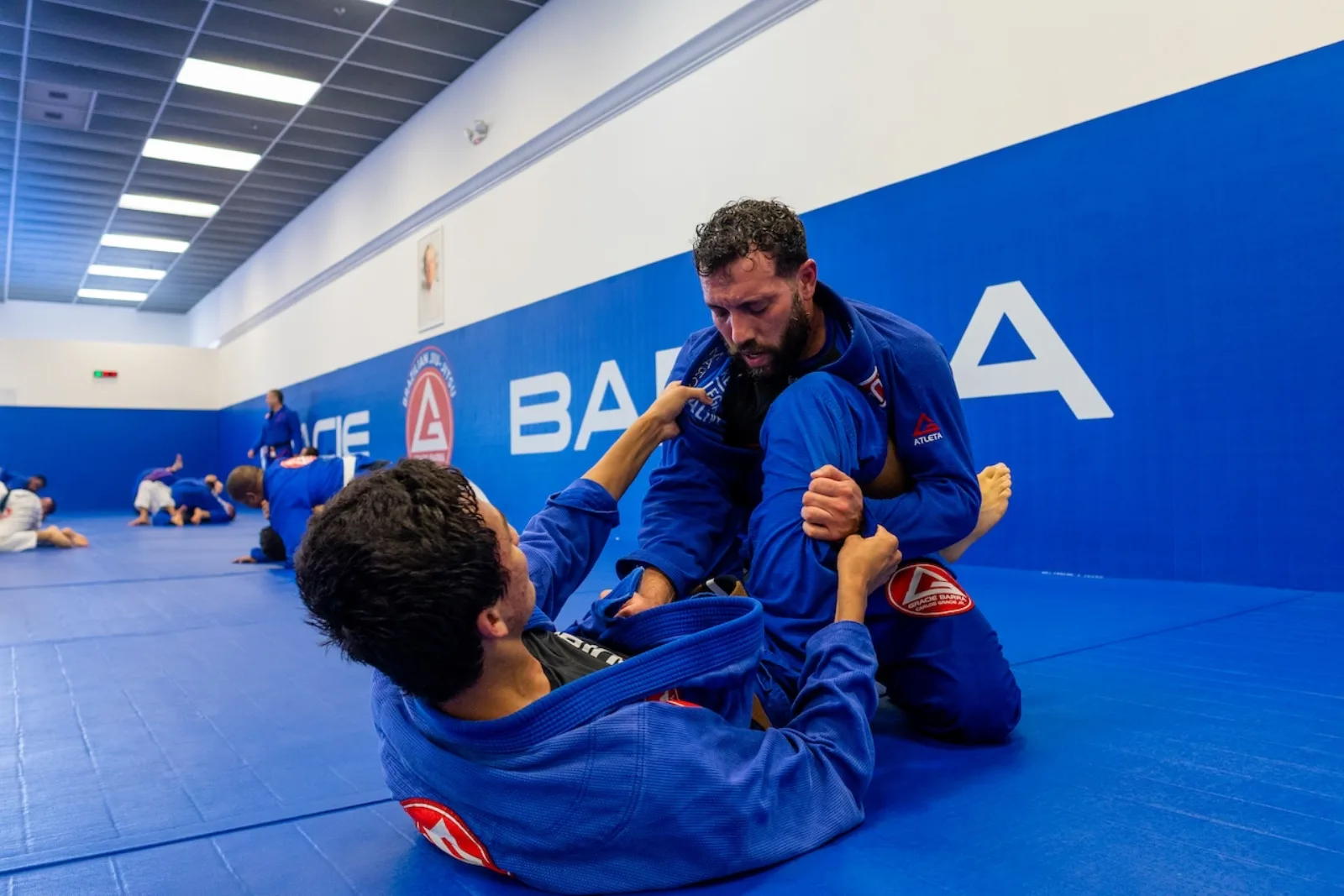
Before You Pass: Posture and Grips
Most beginner passes fail before they start. Why? Bad posture and zero grips. If your opponent has your sleeves, your collar, and your head broken down, you're not passing — you're surviving. Posture up, hands on the hips or biceps, knees pinching their hips, head straight. From there you have options. Without that base, you have nothing.
A simple rule we repeat in beginner classes: grips first, hips second, pass third. If you skip the first two, the third never lands.
1. The Torreando (Bullfighter Pass)
This is the first standing pass we teach at white belt because it works on stiff hips, athletic legs, and tired training partners. From standing inside their open guard, grip both pant legs at the knees, push their legs to one side, step your lead foot wide of their hip, and run to side control.
- Grip: Both hands on the pants near the knee, elbows tight to your body.
- Angle: Push their knees toward one of their shoulders — never straight down.
- Finish: Step around their hip, drop chest-to-chest, lock in side control.
2. The Knee Cut Pass
The knee cut (or knee slice) is the most-used pass in modern BJJ, gi and no-gi. It's a pressure pass — you're cutting your knee across their thigh, pinning their far shoulder, and grinding through to side control. Less explosive than the torreando, more sustainable.
From combat base, drive your inside knee across their near thigh, pin their far shoulder with a cross-face, control their far arm to kill the underhook, and finish by sliding your shin down to the mat. The whole pass is built on pressure — keep your chest heavy, your head up, and your hips low.
3. The Double Under Pass
The double under is the heavyweight's favorite pass for a reason — it stacks your opponent on their shoulders and forces their hips up where they can't generate power. From inside their open guard, scoop both arms under their thighs, drive your shoulder into their belly, walk forward, and finish by stepping around to side control or mount.
It looks ugly. It works on everyone. Coach Thiago Belo and our BJJ instructors drill it weekly because, once you understand the mechanics, you can muscle through bad positions and still finish the pass. Just be careful with smaller training partners — the pressure is real.
Drill These, Don't Collect Them
Three passes, drilled for the next six months, will make you a better guard passer than 30 passes watched on Instagram. Pick one, drill it 50 times a week, try it in sparring, and only then add the next. We see this pattern over and over at Gracie Barra Davenport — the students who progress fastest aren't the ones who know the most techniques. They're the ones who know fewer techniques deeper.
Drill These Passes With a Coach
Guard passing is taught on the mat, not on YouTube. Schedule your school tour at Gracie Barra Davenport — 6250 Grandview Pkwy, Davenport, FL 33837 — or call (407) 289-0076.